Here is the full transcript of the Euvic Talks episode in English, following the requested format.
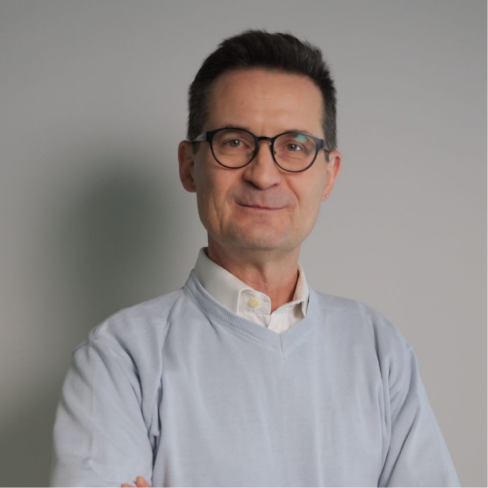
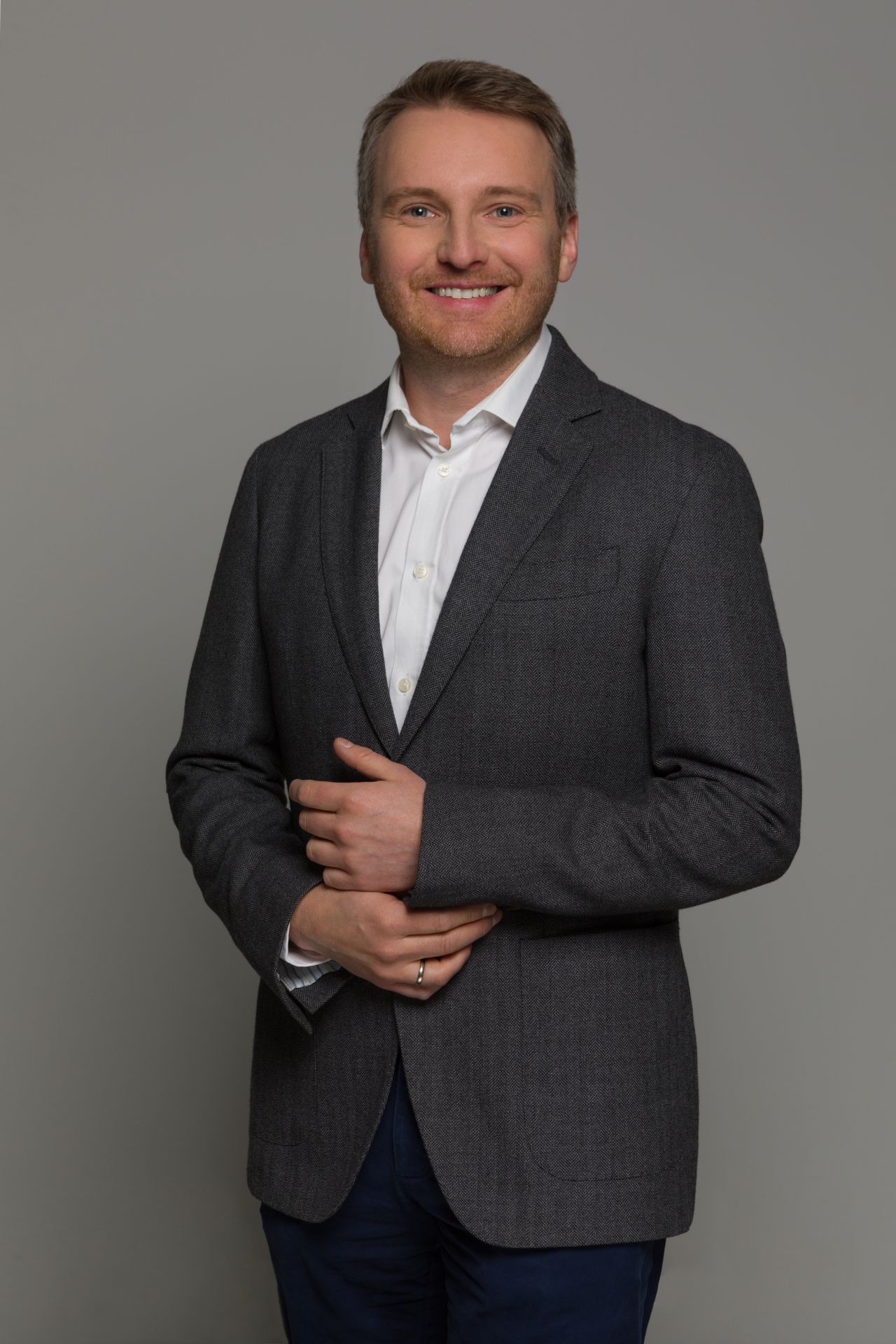
Bartek: Hi, this is Bartek Śliwa. Welcome to another episode of Euvic Talks, where we connect technology with business. Today, we are once again touching upon digital transformation—this time in the broad sense of logistics. For the second time in the history of this program, we have double guests: Vice President Marcin Wojtaszek, hi!
Marcin: Hello, hi.
Bartek: And Cloud Solutions Architect at Microsoft, Ryszard Dałkowski. Hi!
Ryszard: Hi, greetings everyone.
Bartek: Guys, the standard opening question is about your business background. Ryszard, let’s start with you today. What is your story? How did you end up where you are?
Ryszard: My business history is quite long already. I spent many years at Microsoft in various roles, but for the last 10 years, I’ve been looking around the market a bit. I worked for various companies, not only in IT, but also training companies and those that help implement modern solutions in business.
Bartek: Marcin, how was it for you?
Marcin: I’ve reached “adulthood” at Euvic. It started standardly, with internships and the first commercial tasks. First I was a developer, then a solutions architect, but my heart always beat close to infrastructure and operations—that’s also what I studied at the University of Technology. About 15 years ago, I started dealing with this infrastructure and cloud area, first internally, then commercially. Over time, we merged with the IT-Dev team, changed the name to Euvic IT, and I’ve been pushing this piece forward for a few years now. During this time, I’ve gone through several hundred clients, observing the ups and downs of various industries.
Bartek: And did you become Vice President by accident?
Marcin: I’m not the President and I don’t want to be; I prefer my current role. I think it wasn’t entirely by accident, but there’s a bit of luck in it—being in the right place at the right time. My history with Ryszard actually started at the University of Technology, where I was a Microsoft Student Partner.
Bartek: Moving to the topic—digital transformation. What challenges and opportunities do you see in the context of logistics companies?
Ryszard: I think the biggest challenge is not the transformation itself, but the integration with what companies already have. They have a lot of ready-made solutions that they use. To take a step forward, they must combine them with the latest trends. This is exactly where integrators help.
Marcin: In logistics, it looks different in every area. Large companies look for savings and want to be “data-driven.” Smaller companies often struggle with the basics: “my computer isn’t working,” “the system is sitting under a desk.” And soon the NIS2 directive comes in, and suddenly someone requires a specific level of security and business continuity from them. The whole industry is an ecosystem of many entities that need to integrate, and they aren’t always ready for it.
Ryszard: Let’s not forget the people. Moving to the cloud is a mental change. Some people are afraid; they hear myths that the cloud means layoffs. The integrator’s role is to ensure that the technology is accepted by the staff.
Bartek: How can we give clients a sense of security that the cloud doesn’t bite and can bring cost benefits?
Ryszard: First—physical security. Servers in a professional Data Center are safer than those in a basement that could be flooded. Second—flexibility. We don’t have to buy everything; we can rent resources and pay for consumption.
Marcin: Everything starts with processes, and often with the lack thereof. Logistics companies often grew through acquisitions—they bought local companies in different countries. The result is seven different WMS or TMS systems. These are “IT islands.” The first step is to standardize processes, and only then select the technology. If we have technical debt and old, failing servers, the cloud allows us to move resources quickly and gain stability.
Bartek: What specific processes can we support through the cloud?
Marcin: The integration of dispersed systems. Instead of moving data manually, we can use integration components to have a “bird’s eye view” of the entire operation and compare the effectiveness of branches.
Ryszard: Supplementing that—a process touched by digital technology is no longer the same. We can add AI and Machine Learning. Example: cold chain transport. We can monitor the efficiency of cooling units in real-time. A dispatcher can predict that a cooling unit in a car in France will fail in two hours and send another vehicle there before the goods spoil. This is called Predictive Maintenance.
Bartek: And what about data protection and regulatory requirements?
Ryszard: Microsoft Azure allows you to choose where data is stored. We have the “Poland Central” region—three server rooms near Warsaw. The client decides on the location and can encrypt the data so that even Microsoft has no access to it. This is key when cooperating with companies from Germany or the USA, which have strict regulations.
Bartek: As a president of a logistics company, I might not have the competence to decide on this. Do you help with that?
Marcin: Yes. The cloud can also be implemented poorly and cause harm. Often, IT in logistics companies was treated as a “pure cost.” Our role is to show best practices. We can provide the system in a SaaS model, where we are responsible for everything, or in the client’s own “tenant,” where they maintain full control.
Bartek: Give me a specific example of an implementation.
Marcin: I have two. The first is Digital Workplace—a transport company used private emails and flash drives for communication. We implemented Microsoft 365, giving them a single, secure platform. The second example is our own products for Yard Management and transport. One large company wanted it on their own premises to have full control, and another, smaller one, preferred a service model because they didn’t have their own IT team. We implemented both approaches based on the same technologies.
Ryszard: That is very forward-looking. If a company is subject to NIS2 and its own server room doesn’t meet certification, moving to the cloud takes that problem off the client’s head.
Marcin: I’ll add that we care about the “Exit Plan.” We build solutions on standard Azure building blocks. If the client wants to change partners or develop it themselves, they aren’t “locked-in” to Euvic. This is an honest approach. We also help with training, which is the so-called upskilling of the client’s IT teams.
Bartek: Why are representatives of Microsoft and Euvic IT sitting at one table?
Marcin: We’ve been cooperating since 2005. It’s a natural relationship—we know Microsoft technology inside out, and they give us powerful tools.
Ryszard: Microsoft gains industry knowledge. We don’t have a “ready-made cloud for logistics” in the same sense as for finance. We need partners like Euvic who understand the language of a logistics specialist and can translate it into system architecture.
Bartek: Finally, a question about inspirations. What has interested you lately?
Ryszard: I still read books and take notes on quotes. Once in “The Alchemist,” I read a description of a sunrise and thought I had to experience it. A few days later, I was sitting on a beach in Morocco and just waiting for that moment. Such things stay with you for years.
Marcin: For me, the inspiration is my sons—three and seven years old. Watching how they learn to speak and read teaches me humility in business. We cannot assume the other side understands our technical language as quickly as we do. Also, my son got me into the topic of space. Thanks to him, after 20 years, I returned to quantum physics, I listen to podcasts about it, and I’m discovering it anew.
Bartek: Great, thanks for these inspirations and for today’s conversation. That’s all for today, see you in the next episode of Euvic Talks!
Marcin and Ryszard: Thanks!