Resource Management: Is It Worth It? | Andrzej Szopa & Marta Derlatka-Dziedzic | Euvic Talks
This episode of Euvic Talks is dedicated to resource management in IT outsourcing and the role of the General Business Operations area within a tech organization.
The discussion focuses on practical skills management in a project-based model, where workload fluctuations, staff turnover, and time pressure are part of everyday life. We cover how to plan team availability, how to create development paths for employees in an outsourcing environment, and how to align business needs with responsibility for people.
Topics covered in this episode include:
how resource management operates in an outsourcing company from an operational perspective,
when working with an outsourcing partner makes business sense,
how to prepare an organization for such collaboration to avoid skill gaps and project delays,
which factors truly affect collaboration quality and project delivery speed,
to what extent AI tools can support resource management processes and where human involvement remains essential.
The episode demonstrates that resource management is not just administrative management of people’s availability but a deliberate approach to building operational predictability, project stability, and long-term value for the organization.
Bartek Śliwa: Hello, this is Bartek Śliwa. Welcome to the Euvic Talks podcast, where we will connect the business world with digital technologies. In the first episode, we will demystify the buzzword of resource management, or rather, my guests will demystify it: Marta Derlatka-Dziedzic.
Marta Derlatka-Dziedzic: Good morning.
Bartek Śliwa: And Andrzej Szopa.
Andrzej Szopa: Hi, welcome everyone.
Marta Derlatka-Dziedzic: Good morning.
Bartek Śliwa: Listen, so it doesn’t seem like we came out of nowhere, let me first ask you about your business experiences. How did you find yourselves where you are? What led you here?
Andrzej Szopa: As for me, that might be too long of a story, right?
Bartek Śliwa: Maybe…
Andrzej Szopa: Then we’ll shorten it, we’ll shorten it. The most important information.
Bartek Śliwa: Please go ahead. Marta?
Marta Derlatka-Dziedzic: Thank you very much. Listen, Marta Derlatka-Dziedzic, I have indeed been in the IT field for 19 years, and it is always connected with engineering and sales. These are energy entities, telecommunications, municipal utilities like water and heat; IT is always around us somewhere. Andrzej and I had the opportunity to meet in a previous professional life, because 19 years is already quite a bit for me, and it was always the sale of IT services. Whether those were products, or the service of delivering anything, or human resources. Here we have an area called General Business Operation, GBO, which we manage.
Yes, to put it briefly, very quickly, GBO. So we deal with allocation or leasing, meaning allocating hours or people to projects at our clients. And here that is our role, this is my support for Andrzej here, so that we could create this department, organize it, arrange these processes, because there are quite a few of these people. I must say that what we do in this department is not solely resource management, because it’s actually also… we somewhat act as a surrogate salesperson, meaning we have clients whom the company has been serving for years, or we enter into some business relationship with a given client, and what we do for them is our core offering, which is actually software development, what Euvic does, and then General Business Operation is de facto the main activity that handles delivery for these kinds of contracts.
Andrzej Szopa: By the way, my name is Andrzej Szopa, and I have been in this company for over 8 years, while I have been working in or with the IT market for nearly 30 years. I don’t know if that looks good against such a young group of interlocutors, but there’s no denying that yes, I have always dealt with the sale of IT services. It is known that these services at some point—such a built service can often become a license for a given client, but de facto selling services has this unique value that it still requires some interaction with the client, some explanation of what we can actually do for them, what kind of experience we possess, what kind of competences we have, etc. And I actually use this every day in the work we do in GBO.
Bartek Śliwa: Ok, you have to forgive me this question, but what connects you with Hugh Jackman?
Andrzej Szopa: With Hugh Jackman, good question. Back in the day, I worked for several years at Oracle, and I had an American boss there whose name was, oddly enough, Linda Jackman. She and Hugh Jackman actually have—meaning their mothers are sisters, I think that’s how it was from what I remember, a somewhat veteran kind of thread, I would say, because returning a bit to our history, what corporations do, not just American ones, but organizations in general that are heavily focused on very dedicated products and so on, what we do compared to that corporation is a more profiled, dedicated service. Still, we talk to the client about ventures that are somewhat unique to them. It’s not like we supply dozens or hundreds of .NET developers; the history of each of them is individual, somewhat unique.
Bartek Śliwa: Ok, so now if we were to smoothly transition to demystifying Resource Management, what actually is it, who is the recipient, who comes to you and with what problems?
Marta Derlatka-Dziedzic: First of all, in our department there are never problems, there are very interesting tasks to solve, and we start from there.
Andrzej Szopa: That sounded rather marketing-oriented, I think we have a whole mass.
Marta Derlatka-Dziedzic: Of challenges and interesting tasks to handle. Because listen, if we have about 350 people in our GBO department, that’s 350 individualities. 350, excuse me. Listen, and each person is an individual entity that needs to be talked to, to be reached. It seems like, oh good, good, here we have an order for some person’s work, so we’ll handle it, we’ll deliver. A number of challenges are tied to that. From the beginning, even if we talk about hiring new people to our department, or even if the team we already have—it’s taking care of that person, meaning we have a training workshop, we cooperate with them, we talk about what they like, for example, what they don’t like, in what projects they would like to develop, so these are both covering training needs and, actually, a resource manager’s task is to find a project among the portfolio of clients or new ones by cooperating with salespeople, so that this person can find an activity that interests them. Because it’s known that if it doesn’t interest them, they will soon tell us, listen, Marta, thanks, but you know what, the formula of cooperation has run out and I would either want something else, or I will actually leave. And that’s 350 such cases to manage, so it is a challenge.
I must say that we also run various statistics, of course. We handle about 140 projects of various ventures, to which we dedicate various teams, smaller, larger groups.
Andrzej Szopa: There are so many of these topics that they of course have this substantive background, and working in GBO is not just about moving given people from project to project. Rather, from this activity or this type of action, we make a certain added value because, as Marta mentioned, sometimes the effect of professional burnout occurs; a person can no longer work in a given project or doesn’t see a perspective for how they should develop professionally and competitively. Well, we have a large enough internal market that we can transfer someone to another project, we can propose another challenge to them.
The truth is also that what we do in GBO is commercial outsourcing, meaning we mainly hire experienced people who come from the freelancer market, where we don’t really have room to train such people. What the second part of our company does—well, it’s a bit larger—is managed teams. That is a place where employees have a chance to develop from junior to some senior level. But I wanted to say that you can smoothly connect one with the other in such a way that those who work with us in GBO also naturally have long-term contracts; they are also long-term employees. In many cases, these people transition to these managed teams. Where we have a profiled competence regarding specific technologies, specific types of applications, and so on, these employees can also work or transition to such managed teams to develop in a very similar environment.
Bartek Śliwa: Sure, you said 350 people, 140 projects, so I assume it’s not just managing individuals, but also teams, right?
Marta Derlatka-Dziedzic: Yes, yes. It happens that for some clients we have 20, 20-something people, right? They are dedicated to the client, so our role is also cooperation with that client. As we see the budgeting process, planning for the next year, for example, contracting these people. And they are… yes, yes, because we have a specialization. Either .NET developers, or for example DevOps, within narrow project guidelines at the client. Because what Andrzej said, a managed team, as we discussed, comes in with a project from start to finish and has an analyst, developers, testers on its side. We here, as it were, provide people to the project, to the client, and they cooperate closely with the client’s team. That is precisely the difference.
So it sort of happens, and indeed, a resource manager—because there are several of us in the department, four, plus Andrzej manages us—has a certain group of people under them with specific substantive skills. And they manage them as well. Close cooperation here in our team and supporting each other, well, if for example my contract ends for a given role and I see that a colleague has a need there, it’s also such a smooth transition between resources, between people, or personally my person is starting on November 1st in one of the managed teams, on a project, meaning they are dedicated there because there is a need for a team of three DevOps to hit the ground running because it’s a very serious project. So this smooth transition guarantees such… for our employees in both directions, both for our managed teams or here with GBO, such an exchange of experiences, right? Because sometimes it’s cool to go to a client as a borrowed resource for a project and work there. And sometimes it’s cool to run the project here in the Euvic group. So that gives an enormous opportunity for development to employees.
Andrzej Szopa: People also have natural tendencies to work in specific groups. They like carrying out projects in a team where we trust each other, have some experience, etc. So what we do within this resource management, we also construct these teams so that it is possible to effectively assimilate a given specialist. In general, the offering we show a client starts from basic body leasing, meaning the client has their requirements, their developed MVP and says, “I need to build a development team and I need one, two, or five roles from the outside, and I have some of my own.” Then there is a more advanced issue, when e.g. we talk about team leasing, when we dedicate a specific group so that this group realizes a long-term project. Long-term doesn’t necessarily have to mean 5 years, but it can also last a few weeks or months. And until we reach a point where the client says they need an end-to-end solution. And then most often GBO disconnects, and then we involve colleagues from the managed team where there is specific industry expertise and so on. We can attach someone to that who will entirely build a defined, more complex team than just one profiled for a specific technology and so on.
Bartek Śliwa: Right, you’ve smoothly transitioned to the client’s perspective. I’d like to capture that picture: who is this client, who comes to you, with what need, and should they prepare specially for this, or rather why shouldn’t they just hire programmers and specialists from the market themselves instead of coming to you for help? I would like, for example, to be my own client simply.
Andrzej Szopa: Everyone would want to be our client.
Marta Derlatka-Dziedzic: [We have a lot of wonderful clients].
Andrzej Szopa: That’s a simple answer to that question, but to justify it a bit, we should probably smoothly transition to the fact that outsourcing has its added value. And it’s not just that outsourcing in a simple way—for many clients or investors—service outsourcing is tied to the risk that the vendor will establish a so-called vendor lock, meaning they will have a certain competence or full knowledge about a given solution. It will be so unique that the client becomes entirely dependent on that vendor. That can actually be managed. All these elements are commercial parameters included in the contract, and all these things can be arranged so that the client avoids this type of risk. However, there is no denying that outsourcing is a certain freedom. It gives the client or investor the possibility to change many things, modify them, suspend the implementation process, make changes to the project structure, team, etc.
Bartek Śliwa: They have a much easier room to maneuver.
Andrzej Szopa: Of course, this is our internal response/opinion, but let’s be honest, it is not without grounds. They have a much larger room to maneuver than managing their own resources hired on a payroll, meaning employees on standard employment contracts.
Marta Derlatka-Dziedzic: Of course, all clients we cooperate with have their own resources. They have their own resources, teams, whether development or testers. Nevertheless, they know how much time it costs. Recruitment, getting a person who focuses not only on technical competence, but also on soft skills, team behavior, spending some time—even if they are able to add 1, 2, 3 people to the team at once. That is all time, and time is, as we know, money. And there is never a guarantee that even if this person is with us for half a year or a year, they will say, “listen, those three months of probation were not enough for me, I want to leave anyway,” or “I want to change something,” or “my wife stayed at the other end…” or “my husband stayed at the other end of Poland for work and I’m moving.” We don’t have such a guarantee. So what we said is a complement, complementary to our clients, because as GBO—meaning body leasing—we can deliver a candidate according to a specific job description, meaning the description of the workstation and needs. They are ready, they are trained. Please notice that they have massive experience in working with various clients, various projects, in different teams, with different cultures, because we have clients from abroad as well. These are not just the States. It’s practically the whole world. So that is also an added value when we give such a person from body leasing to our team, that the client’s team can also draw from that knowledge. So these are truly things that are a plus. We are not talking about… we probably don’t even have clients who have 100% body leasing only. Because that’s not really it. That rarely happens. That has to be a client who simply has some project of theirs, some fund financing that project, and they only need this replacement cost, a comprehensive contractor who performs all the work for them.
Andrzej Szopa: However, such a phenomenon does exist on the market. Referring now to my 30 years of experience, that once applications were written custom-made. Then it evolved towards buying ready-made applications. Mostly from large corporations.
And now we are reaching a point where the client wants to write applications for their own requirements and wants to participate in this process. That is why all these agile methodologies, Agile, Scrum, and so on, are something we offer. Meaning, as Euvic we generally offer this type of service; we don’t differ significantly from managed teams. But what I mean is that the part we perform for the client is tailored to their needs, they take part in this process by assumption—apropos of what Marta said—by assumption they want to have someone, some specialist on their side who is for example a product owner, controls this implementation process a bit, moderates requirements, moderates subsequent sprint goals or subsequent project implementation stages. And I think what we do in outsourcing is not just limited to supplying such a person. Of course, one can simplify it to say we have a suitable role. Clients sometimes ask us very precisely to have, e.g., a specialist with a minimum of 5 years of experience in specific technologies and specific certifications for certain skills or technologies, and we can deliver someone like that. Of course, we don’t exaggerate that it’s 105% precisely that person, that they have to be a handsome blonde, because it’s not always quite like that, but ultimately we are very well-fitted to what the client needs. I’ve gone full circle, but returning to the beginning: if a colleague/client thinks they can hire such a person independently, they must invest in their training and professional development. They must know what this profile should look like purposefully. They must have a methodology to be able to test if there is progress or impose a development plan for this employee. And in the end, the client risks—here I hand the floor over to you—the client risks that once they train this person and well-prepare them for the task they want to dedicate them to, that employee sometimes has had enough and says they will try elsewhere. And that investment won’t pay off; it’s a bit natural, it has to happen, but unfortunately it’s hard to control.
Marta Derlatka-Dziedzic: An important aspect you brought up. I wanted to open my mouth, but I held back. That is what you said: when contracting, whether a Managed Team or as we have here, a specific person from body leasing, we agree on it. It’s a business agreement between us for a given rate. Time, money. And having a person here, as Andrzej said, of course we train them, they come to us, but you need a career path prepared for them. You need potential development opportunities, and promotion stages are tied to money. Here, taking such people from the market is sometimes a slightly simpler path. And one more thing, it seems very important from my experience: when a company, our provider, grows organically, one or two people, you can calmly handle everything in time, but suddenly when we have a jump, for example, where we suddenly need 20 developers to quickly do some work, maximum half a year, eight months, that is also a space for our cooperation, because scaling like that is very fast, right? And here that is a client who returned to us—Andrzej passed them to me recently—where we did a certain thing, wrote a certain product, delivered it, and after 5 years, when they say “listen, I have such a huge backlog that I now need, listen, to hand over that scope of work to you for a maximum of 6 to 8 months. Help and do it. And select, you select specialists for my scope,” right? And that’s what it’s all about now. They of course have their team, and we are supporting and supplementing them as much as possible, right?
Andrzej Szopa: Let me step away for a moment to the topic of how these employees are managed and what the added value is of getting this employee from outsourcing. I wanted to say that our organization as a whole, or this outsourcing process, is not only based on GBO having say 350 people, but we use the resources of our entire group. If we look at Euvic itself, we already have about 1,100 people here, and we have specializations in managed teams regarding specific, complicated various experiences. We also have an entire group where we say that the population from which we can theoretically recruit someone for our projects is already about six thousand, although our folders say we have over 5.5 thousand specialists or IT engineers, but we have a large internal market that allows us, firstly, to react to sometimes specific client requirements, and this market also works the other way around. Employees say they would like to change projects, and there is nothing offensive in that for anyone, they just want to make a certain change in their career path and are looking for a different occupation. Soon a law of this kind will enter the market that will mandate employers to publish such vacancies and so on, that’s a different matter, with us it happens quite smoothly, this information is no secret, but we draw heavily from a large internal market which provides the guarantee that a client is not able to train such a mass of various specialists themselves to be prepared for any situation. And on the other hand, there is a rather simple issue that most of our clients… we also serve a lot of startups, companies that invest in a given product and assume that a certain e-commerce will be built on that product, so these clients also develop together with their market. They have more and more employees, a larger support group, etc., and they reach a point where feedback occurs. To maintain a company of that scale, you need a certain turnover, certain contracts, a certain revenue, as they nicely call it. Linda and various people from her surroundings. And then this sales process requires some forecasting, transferring new projects, and it’s hard to pull back from that. It’s hard to say “I can limit resources now” because that will simply be tied to employee layoffs. In the case of outsourcing, we have a contract with the client, there are certain frameworks in that contract, we are prepared for them, we know that in 3 months the project will end and we prepare a new project for our employees, for our outsourced resources, while the client says “I’m taking a break for a few months as part of some production cycle.”
Bartek Śliwa: Sure, I parked two things in my head. You said there might be this problem when our client invests in the development of our employee—meaning their employee—and that employee leaves. It would be worse if they didn’t invest and the employee stayed. So, dear clients, invest in the development of your employees, that’s the first thing. And the second thing, from my point of view, a certain problem might occur, and I’m curious how you deal with it. Namely, Marta, you mentioned soft skills, which are very important, and you also mentioned that very often we are a supplement to the client’s teams. And well, the definition of a team is that you have to do something together, deliver together, and on paper this candidate might match us. We have all the necessary certificates, experience, and so on and so forth. But there is no chemistry in the team. What then? Do you have such cases, how do you deal with them?
Marta Derlatka-Dziedzic: First of all, it’s like this: our client also conducts a minimum of two to three interviews. At least in my cases. And beyond technical competencies being checked, behavior and team fit have genuinely been checked over the last year. And at that stage they eliminate people who won’t fit. And they tell me, “no thanks, Marta, no thanks, listen, I need a different candidate here. They were good in terms of substance.” And indeed, we are slowly leaning towards the idea that when we do recruitment, sometimes our own internal ones, we should check our candidate under this aspect as well. But it all aims at profiling such a candidate. To match the project we have for them with their actual skills and so on. Personality, right? Because sometimes a team is like that—everything at the last minute—and they like things structured. Well, that’s also the resource manager’s role a bit, right? To learn as much about the project as possible. Well, when you work with these people for a bit—maybe not as many years as Andrzej here, but still, you know, contact with people, the amount of work on a project, the background you actually bring from the market, which you brought with you working here, helps a bit, at least for me, in saying “they completely don’t fit this team, they’ll struggle there and the client will struggle with them.” So I, for example, don’t even send such a candidate.
We are of course a business entity, but we are also “tweedy,” if you associate it with the Scottish market, what softness is about. We generally care about matching both sides. If for example our candidate resigns from a project, it rarely happens that they do so because they are arrogant or for example don’t want to do it because they have more important matters, etc., and abandon such a topic. They simply cannot develop further in that project somehow, don’t see their role, cannot realize themselves, need something else.
Andrzej Szopa: Clients also often ask enigmatic questions or write sublime specifications, and then we have to deliver a DevOps-designer-programmer, someone multi-functional who doesn’t exist on the market. That naturally stems from expectations to optimize costs, etc., but it doesn’t work. It also requires explanation, matching what we actually have with what the client actually needs. It can’t be said that we don’t make various mistakes in this, but we manage to deal with them. I don’t think we have ideal candidates and ideal projects here, but what we try to do is link one with the other so it can be implemented, so the topic can be consumed.
Marta Derlatka-Dziedzic: And upon such an exit, there is always an exit interview and questions actually. “Listen, what was that about,” right? And we make notes like, oh, on that project it was said I would be doing this, this, and that, but it was a bit too little for me, for example, right? Well, that’s then verification for us too, right?
Andrzej Szopa: Let me add a word here that yes, we do use the support of our HR, right? We have onboarding, we have various procedures regarding exits as well. If we part ways with an employee, or they do it with us, it’s not an anonymous activity. We try to find out what the reason was, what could be changed at all. All these types of cases are actually a good example for us to be able to improve it. In the future. I didn’t have—sorry—I didn’t have a neat shortcut. I’m driving at the fact that GBO is a department that internally cooperates with the whole company. It’s nice to say we are a surrogate salesperson if we directly serve a given client, but of course we work with the sales department, which is a hunter, looks for clients, looks for opportunities outside, and then we adapt to their declarations, expectations, declarations on the client side, expectations on the internal side. So the cooperation of our department is rather—well, I flatter myself a bit by saying it’s the center of this company, but the phrase “general business” didn’t come from it being the most important, but just a basic one, he said, right? The company’s core offering, meaning software development, revolves right here.
Bartek Śliwa: And I would like to paraphrase a question I already asked, which is: how to reach you, how to prepare for a meeting with you, what should I know as a potential client who feels they have a need regarding IT services to feel ready to talk to you and what to talk about with you, or do you give hints during such meetings?
Marta Derlatka-Dziedzic: Clients just need to know what they need. Meaning not what kind of specialists they need, but what they want to do. Meaning business-wise.
Andrzej Szopa: Yes, they just handle these—they handle it using nice phrasing, like. They handle business requirements, right? Expectations like that, they know what the goal is, right? They have a product owner, they have someone who understands what they are supposed to engage a group of people for, what to inspire them with, and so on. Because IT projects, let’s be honest, that is not building something out of iron, right. It’s a bit ethereal, requires inspiration, requires a bit of fantasy, requires cooperation with various personalities. Part of it is introverted, part has a very dynamic character. An IT project requires a certain framework. You have to be able to control it to gather the right team, but you also certainly need to be able to answer for yourself what you want to achieve in the end. Our clients sometimes have an imprecise definition in this regard, and we help them manage it somehow.
Bartek Śliwa: So we can count on consulting as well?
Andrzej Szopa: Yes, consulting is probably our core product too. We often use our people not necessarily to program, but first to build an MVP, analyze business requirements, analyze processes inside the company. I’m not aiming for a programmer to be an analyst, though sometimes they play a combined role. But I mean that we help the client answer the question of what they are actually aiming for. And then it’s easier. Then we get specific roles or a specific goal the client is pursuing. And then it’s smooth sailing.
Marta Derlatka-Dziedzic: Yes, Marta specializes, from what I know, in that… I always, you know, if I don’t know something, I would like to ask, and then I have a list of questions and everything is clear already. Because that also makes it easier for me, and for every resource, everyone, every person of us here in this department, it genuinely makes it easier, because sometimes it’s like that—and that’s what first meetings with a client serve—”Okay, I have such a need and such a role, but is this for me as a resource manager, meaning body leasing, or is this for managed teams for example?” And I recently had such a very short meeting, listen, half an hour, so we knew where the need was. And it turned out that the first area is indeed a need for body leasing, adding a few people to an existing team on the client’s side, and the second case, from start to finish, will be a topic for a managed team. And it’s also cool to have such meetings to be able to define that with the client and divide it.
Andrzej Szopa: We are also a bit of a hub in our company, our organization. Sometimes clients apply to the company, write an email to an open email, some conversation begins, some initiation, and so on. It’s not yet clear where it’s heading, sometimes it requires meetings. We talk a bit about something unspecified, but we are also at a stage where we delegate this topic further. We have our own, you could say, domain offer, but not everything is body leasing, not everything is a service we can outsource from our resources. That rather applies to more specified requirements. However, most often the client needs advice, needs to be told about adequate, similar projects, solutions, and so on. And for that, let’s be honest, a managed team is most suitable, which has its expertise as I mentioned earlier, but most importantly, has references. With us it’s quite difficult, because talking about references, we can say the first reference is how many people we have at a given client. Then we can say in what industry we have these clients overall. And we can go further of course with these references, but they always have a rather general character, speaking about scale, maybe even the level of difficulty sometimes, but rather referring to scale. In the case of managed teams, it’s about saying we can build certain products. Of course, we also have projects that have commercial effects, have their end, and we can point them out too. But body leasing relies largely on the client’s awareness, who says “I know what I want to do and I need support for that.”
Bartek Śliwa: So you sometimes play the role of a forklift driver who decides whether a topic is strictly body leasing, team leasing, or a topic from scratch to the end, or to some stage, and a group within a managed team should handle it, right?
Marta Derlatka-Dziedzic: A forklift driver is a term that, it seems to me… An advisor, I would say, you know, more of an advisor. Yes, yes, because sometimes even if a salesperson, as mentioned here, is a hunter who opens the first door, you know, they don’t have time for such specifics, right? They just open the door and say “listen, help” and that is very often such support, right? And from further conversations, and that probably really happens in our department, it turns out that fine, this stays here, we pass it on because it’s end-to-end, meaning a managed team.
Bartek Śliwa: I want to connect, Andrzej, to what you said about this special approach to programmers, because for that reason agile methodologies are created, which are very close to me.
Marta Derlatka-Dziedzic: And thanks to you they are close to me too.
Bartek Śliwa: Thank you. Generally, the point is that it was finally recognized that people working creatively need a slightly different approach than, for example, factory workers, because this work is unusual, it requires, as you said, some flair and a certain inspiration. Listen, I wanted to surprise you with one last question. Or rather ask you to share one inspiration. Something that will stay with our viewers and listeners. It could be a movie, a book, a habit you introduced into your life. It could be an experience that happened to you recently and changed something in your life.
Marta Derlatka-Dziedzic: You opened up a… because this past year has been mega, mega interesting. Well, no, when it comes to cooperation with Andrzej in this area.
Andrzej Szopa: I’m afraid of what comes next.
Marta Derlatka-Dziedzic: You know, I developed and I think I very strongly refined time and priority management techniques, though I thought I was always good at it, but here I say I had to crank up time and priority management by a thousand percent, meaning yes. Cooperation with the sales department is…. Yes, it’s demanding sometimes. Yes, absolutely, so work speed and what, listen, I can really handle—that’s the two-minute rule, right? That whatever falls on you and you are able to handle in two minutes, do it immediately. Don’t put it off, because then there are, listen, so many emails, so many meetings, so many videos, so many phone calls that it might slip your mind, but I think yes. Or it definitely slips.
Andrzej Szopa: I didn’t know it was called the two-minute rule, but… That’s its professional name. I discovered it a couple of years ago, but I apply it. Which unfortunately causes me to first handle a whole mass of various matters that are… most things can actually be handled quite quickly. Using a—the Scrum programming methodology is nice because it also allows both sides to be here and now, be more aware, rather than waiting 3 months for the effect of something, after which the person who ordered asks what you did and is surprised by the result, and also the one who executed is surprised by that opinion because they say “we wrote exactly what you wanted.” I’m driving at the fact that I… could of course point out some books or some random list, especially since we were at a nice conference recently and it seemed there was an infinite number of ideas for such suggestions. But yes, I would certainly suggest that those who like it should remind themselves, and those who don’t like it should read that yellow book about Scrum, because I read that book twice and regardless of that… meaning every time I discovered various things anew, but it is rather—I don’t know, maybe belles-lettres, but it certainly nicely hints to people how you can cooperate with a group. However, I suggest that if anyone is interested in more philosophical reflections and what awaits us in the context of GPT and so on, they should read a book like “Homo Deus,” which is slightly based on philosophical or historical reflections, but talks about where we are heading. We are part of some process that we are currently in, and those people who use Agile on a daily basis say, “you don’t need to redefine this because we’re simply in it,” while for many people it’s a unique discovery. Just like ChatGPT scares us a bit, whether it could theoretically replace our outsourced engineer, and that’s practically impossible. ChatGPT can at most replace us in writing some trivial code that is supposed to attach something, or even let it be non-trivial, let it be very complicated. I wouldn’t want to offend any great specialists in this field. Let it write that software, but our engineer knows more than just that piece of code. So that’s probably what I wanted to aim at.
Bartek Śliwa: I hope you liked it as much as I did, because that was the first episode in this series. I hope not the last. Thank you very much for your active participation.
Marta Derlatka-Dziedzic: Thank you for having us.
Andrzej Szopa: Personally, I thought it would take much longer. Pleasant time flies fast. Even being so short, it was really nice.
Bartek Śliwa: Thanks, see you.
Meet our guests
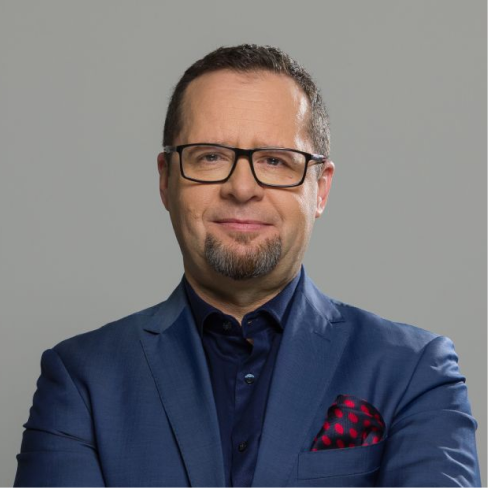
Andrzej Szopa
Dyrektor General Business Operations
Euvic S.A.

Marta Derlatka - Dziedzic
Resource Manager
Euvic S.A.
Have a topic? Let's talk!
At Euvic Talks we meet people who act, not only talk. Write if you have an idea for an episode.