340% PPE Growth in energy industry
A Scalable Billing System for Polenergia Dystrybucja
Client:
Polenergia Dystrybucja
Industry:
Energy
Country:
Poland
Service:
Billing system with payment and debt collection module
Client_
Polenergia Dystrybucja is part of the largest private energy group in Poland – Polenergia S.A. The company specializes in comprehensive energy services, including the construction, operation, and maintenance of its own power infrastructure. It operates nationwide, offering modern and sustainable energy solutions for both individual and business clients.
Our role in the project_
Our team was responsible for the comprehensive implementation of the project – from business requirements analysis, through implementation and testing, to deployment and ongoing maintenance of the system. We delivered a dedicated billing system supporting the settlement of electricity sales and distribution. As part of the collaboration, we provide ongoing technical support, functional development according to the client’s needs, and system adaptation to changing market and regulatory conditions.
Key objectives_
- Ensure stable maintenance and continuous development of the billing system.
- Adapt the system to current and upcoming legislative changes and energy market requirements.
- Implement new functionalities supporting innovative solutions introduced by the client for its end customers.
- Automate key processes to increase operational efficiency and the ability to handle a growing volume of data.
- Integrate with systems of external service providers to ensure consistency and scalability of the entire ecosystem.
Challenges_
During the course of the project, we encountered a number of challenges
that required a flexible approach and close cooperation with the client:
- Complexity of legal regulations – changing energy market laws required constant monitoring and rapid adaptation of the billing system.
- Integration with multiple external systems – the need to ensure seamless cooperation with other service providers’ systems.
- Scalability of the solution – the growing number of customers and data volume required performance optimization and architectural improvements.
- Process automation – transforming manual operations into automated workflows while maintaining high data quality and compliance with business requirements.
- Customer data management – ensuring security, integrity, and compliance with data protection regulations (e.g., GDPR).
Workflow_
Both the main project and the subsequent development changes were divided into the following stages:
- Business requirements analysis – Workshops with the client to understand processes and operational needs.
- Documentation of functional and non-functional requirements.
- Solution design – Development of the billing system architecture.
- Preparation of the integration concept with external and internal systems.
- Implementation – Development of system modules according to the defined scope. Creation of user interfaces and business logic.
- Testing – Unit, integration, and acceptance tests.
- Verification of compliance with legal and operational requirements.
- Deployment – Data migration and configuration of production environments. Training of end users and the operations team.
- Maintenance and development – Ongoing technical support and system monitoring. Introduction of new functionalities and adjustments to market and legal changes.
Strategy adapted_
The project was carried out using the Scrum methodology, which enabled iterative delivery of functionalities and flexible responses to the client’s changing business needs.
Project Management:
- Scrum methodology – The project was implemented in sprints, with a clearly defined scope of work
and goals for each cycle. - Retrospectives after selected stages – Allowed for evaluation of the collaboration to date, identification
of areas for improvement, and implementation of enhancements in subsequent project phases. - Dedicated status meetings between team PMs – Instead of participating in the client’s daily operational meetings, communication took place through regular status updates between project managers, ensuring effective progress tracking and adapting the scope of work to current needs.
Client Collaboration:
- Close operational cooperation – Maintained through dedicated
communication channels and quick response to client needs. - Flexibility in scope adjustment – Ability to quickly respond to new requirements arising from legislative changes or the client’s business strategy.
- Transparency of activities – Availability of information regarding work progress, backlog, and deployment schedule for the client’s team.
Maintenance and Support:
- 24/7 support portal – The client has access to a dedicated portal
enabling round-the-clock reporting of incidents and service inquiries. - Direct communication channels – For urgent requests or clarification needs, fast contact options such as Microsoft Teams or phone calls are available.
Delivered solutions_
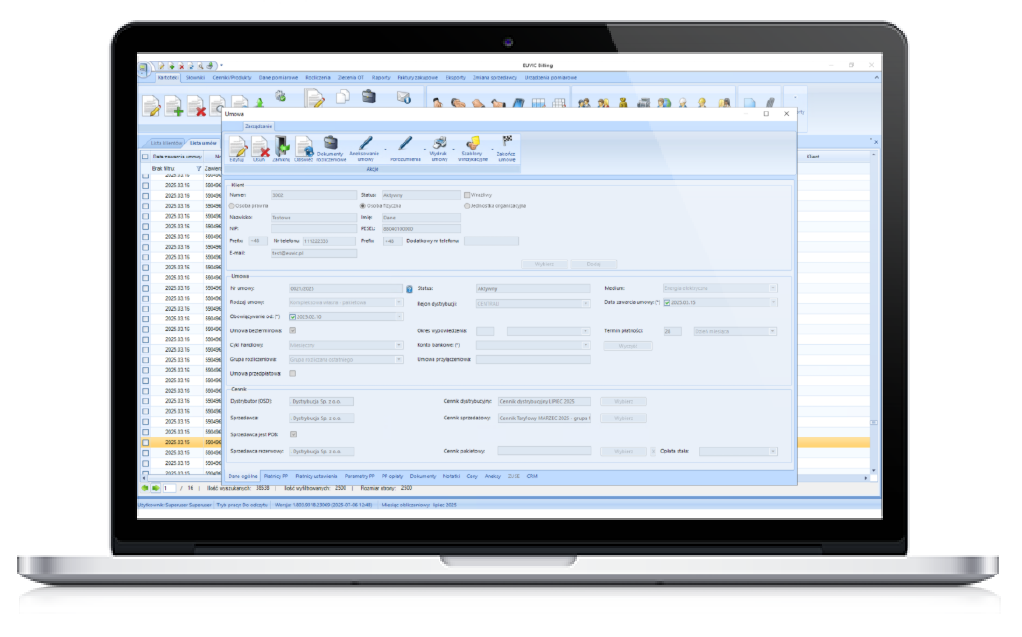
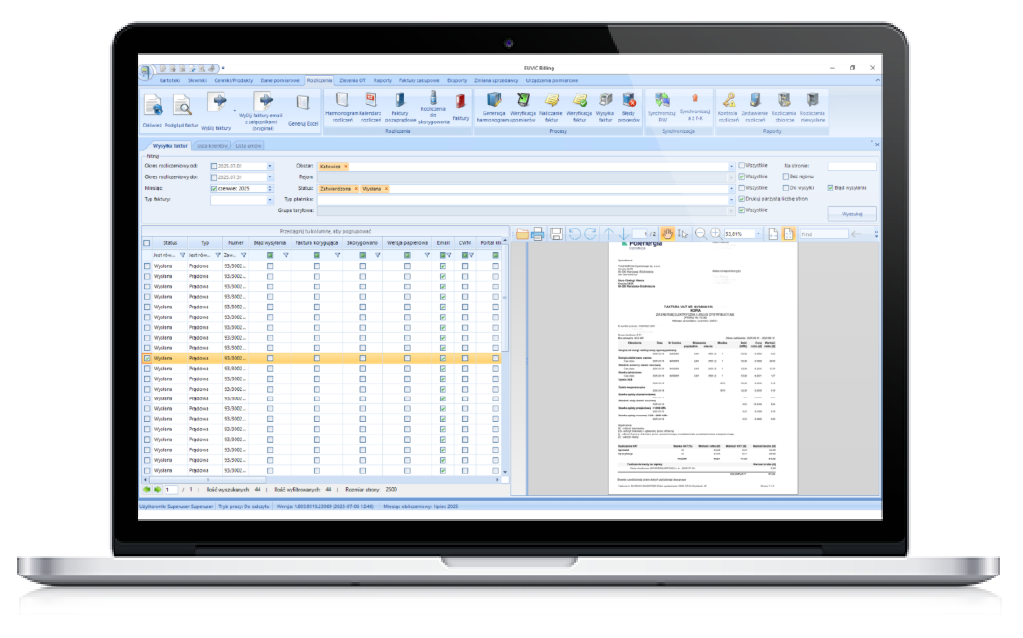
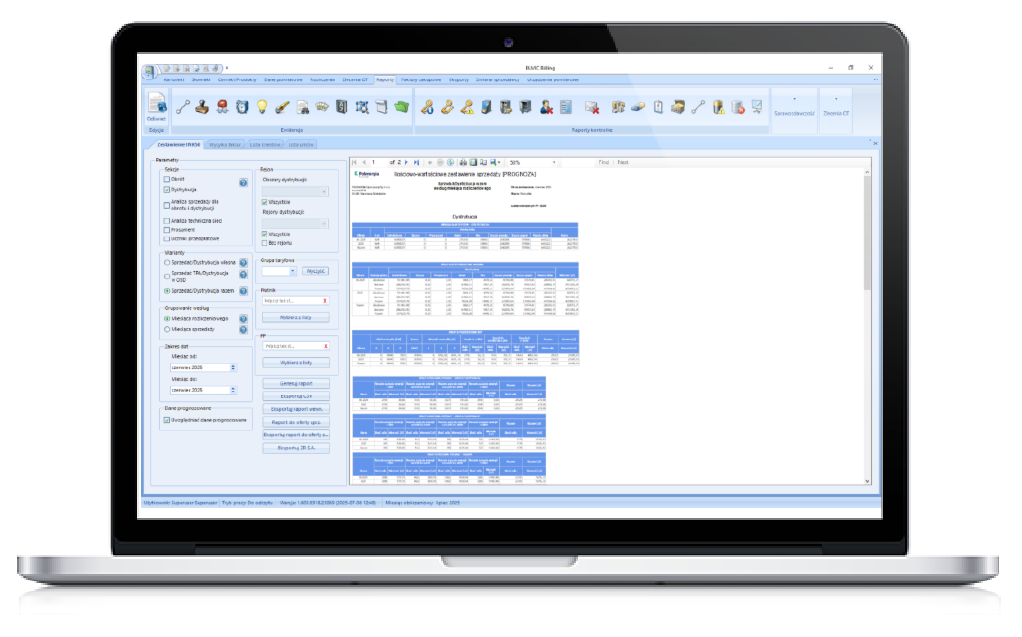
The EUVIC Billing system offers a wide range of functionalities supporting comprehensive handling of billing and settlement processes:
- Data management – Collection and processing of information about all entities involved in sales and distribution processes, including data on contracts, consumption points, and meters.
- Customer segmentation – Ability to define customer types, categories, and groups to better tailor the offer and service processes.
- Measurement data handling – Collection of meter readings and energy consumption data for specified billing periods.
- Flexible fee and pricing definition – Support for various tariff models and independent definition of billing cycles for variable fees, fixed fees, and contracts.
- Advanced settlements – Comprehensive settlement of utility deliveries for end users, including distribution charges based on tariffs of external operators.
- Consumption-and forecast-based billing – Capability to bill customers based on actual consumption or forecasts individually configured for each consumption point.
- Invoicing and document dispatch – Generation of invoices and sending of settlement documents to specified email addresses.
- Integration with financial and accounting systems – Preparation of data for cost allocation and further processing in external systems.
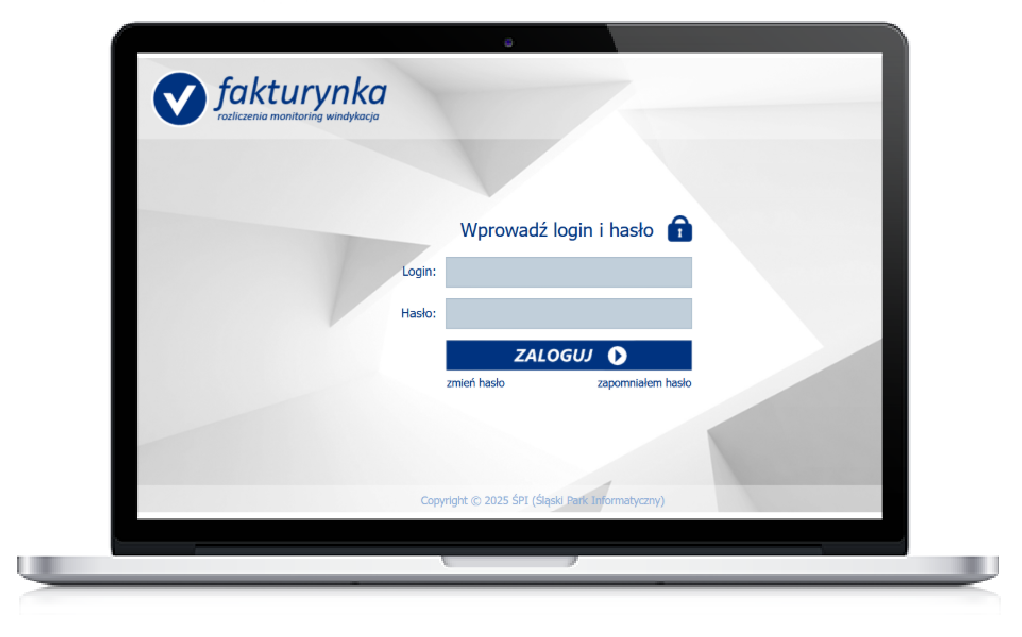
Fakturynka – The EUVIC Billing system is integrated with the “Payments and Debt Collection” module, which enables:
• Handling of payments and settlements with customers,
• Automation of debt collection processes.
Benefits_
- Increased operational efficiency – Automation of billing and settlement processes reduces operational
costs and minimizes the number of errors. - Scalability of the solution – The system is ready to support a growing number of customers and consumption points.
- Regulatory compliance – Continuous system adaptation to legal changes and energy market requirements.
- Faster implementation of new services.
- Improved control and reporting – Supporting business decision-making.
- Intuitive operation – A clear interface and logical system structure.
- Automation of routine tasks – Reduction of manual data entry and repetitive activities.
- Faster access to information – Easy retrieval of data on customers, contracts, invoices, and service requests.
- High data quality – Validation and control mechanisms increase confidence in settlement results.
- Technical support – Ability to report issues via a 24/7 portal and quick contact in situations requiring intervention.
ROI and business impact_
- Increase in billing volume without increasing staff resources – The implemented billing system enables handling a growing number of customers and consumption points without a loss in performance, which translates into operational scalability and reduced employment costs.
- At the beginning of the project, the client was operating with 10,000 billed consumption points (PPE). Currently, there are over 44,000 in the system – an increase of 340%.
- Operational efficiency – Automation of billing and settlement processes has significantly reduced handling time, systematized operations, and eliminated errors caused by manual data processing.
- Cost savings – Thanks to integration with financial and accounting systems and the automation of debt collection, the number of manual interventions has been reduced, leading to lower operational costs and increased process profitability.
- Flexibility and regulatory compliance – The system is continuously adapted to evolving energy law regulations, minimizing operational risk and ensuring continuity of service.
- Improved data quality and information availability – Implemented validation mechanisms and an intuitive interface enable quick access to customer, contract, and invoice data, supporting business decision-making.
Project team_
- Project Manager (PM),
- Lider techniczny (Tech Lead),
- Analityk biznesowy,
- Ekspert dziedzinowy
- Zespół deweloperski – 5x .NET Developer, 1x PHP Developer,
- Zespół testów (QA) – 4x Quality Assurance Engineer,
- DevOps Engineer.
Technologies and frameworks_
- .NET 8,
- .NET Core (API, Connector),
- Entity Framework Core,
- Dapper,
- PHP,
- Python,
- WebAPI,
- WCF,
WinForms, - Telerik,
- Microsoft SQL Reporting Services (RDLC),
- Docentric,
- Microsoft SQL Server (MSSQL),
- Azure,
- Jenkins,
- Grafana,
- GIT,
- TypeScript
Summary_
The delivery and implementation of the EUVIC Billing system confirmed the effectiveness of a flexible collaboration model, modern technologies, and a deep understanding of industry specifics. Thanks to the commitment of an interdisciplinary team, all key goals were achieved – from the automation of settlement processes, through increased operational efficiency, to ensuring compliance with evolving legal regulations.
The project provides a strong foundation for further system development and expansion of the cooperation scope.
Future steps_
In the near term, the following actions are planned:
- Further development of system functionalities – implementation of new features and modules.
- Continued process automation – elimination of manual operations.
- Strengthening integration with external partners – expansion of APIs and integration with operator systems.
- Ongoing collaboration in a partnership model – continued joint planning of the system development roadmap and quick adaptation to changing business needs.