How To Choose A Software Outsourcing Company: 5 Criteria That Matter Most
Choosing a software outsourcing company is a bet on delivery, and the odds are modest. PMI's 2025 research found that only half of projects meet a modern definition of success, with 13% failing outright and 37% only partially delivering.
Demand holds anyway, and 80% of executives plan to maintain or increase their third-party outsourcing investment, according to Deloitte's 2024 Global Outsourcing Survey.
Euvic's view is that the outsourcing model is broken, and three pitfalls sit behind most failed engagements:
- The Cost-Savings Trap: choosing on rate alone.
- The Polished-Look Pitfall: trusting a pitch more than the team behind it.
- The Incentive Issue: a vendor rewarded for winning contracts more than for delivering results.
Each of the five criteria below catches at least one of them. Santo Polito, who joined Euvic US after close to 15 years in offshore outsourcing, shares what he has seen.

I've spent close to 15 years in the outsourcing and BPO world, working with clients across nearly every offshore market you can imagine. Latin America, Bulgaria, India, the Philippines, among others."

Two Gates To Clear Before You Score Anyone
Some requirements are pass or fail, so settle them first.
- Time zone overlap: Polish teams work about six hours ahead of US Eastern Time and share the US morning with you. Our comparison of Latin America and Eastern Europe weighs that factor against others.
- Security and ownership: confirm security certifications and written terms for code and data ownership. Our post on AI and cybersecurity risk shows what a weak partner leaves behind.



5 Criteria For Choosing A Software Outsourcing Company
1. Retention And Team Continuity
Deloitte's survey of more than 500 executives found that improved access to talent is the leading reason organizations outsource, cited by 42%. When you are buying talent, how long it stays is part of the product.
Gallup estimates that replacing an employee can cost one-half to two times annual salary. On an outsourced team, the ramp-up shows up as lost schedule even when the vendor absorbs the invoice.
- Ask for: the proposed team's average tenure and attrition on comparable accounts over the past year.
- Red flag: a bench that rotates people between clients.
Santo describes the Polish teams he now works with:
What surprised me is the depth of the engineering talent in Poland. It's deep, specialized, and made up of people who've been with the company a long time instead of contractors rotating in and out."
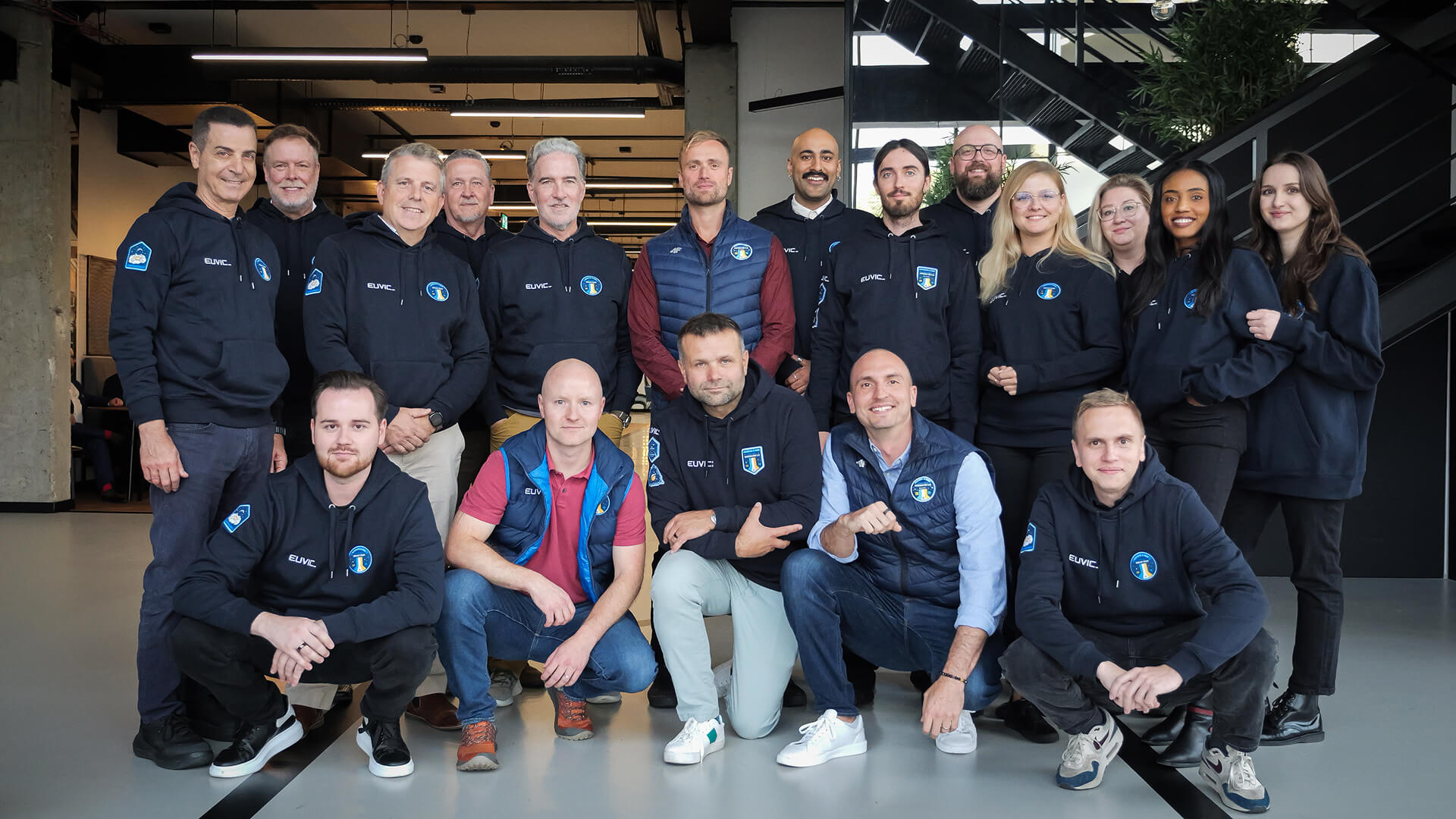
Euvic organizes its 6,000+ engineers into more than 100 specialized teams. Our post on why Poland covers the talent pool.
2. Proof You Can Verify
A polished pitch costs a vendor nothing, so weigh evidence a client has already paid for.
- Ask for: two references of similar size and scope, including the client's technical lead as well as the sponsor.
- Red flag: no named clients or results, which is the Polished-Look Pitfall in action.
Euvic built a document management platform now trusted by the FAA, DOJ, and NIH over 20 years of continuous development. It also helped a financial advisory firm managing $29 billion in assets achieve a 300% productivity improvement.
Santo puts the standard plainly:
What you see is what you get. There's no smoke and mirrors, and you're not paying a fortune for a polished deck and get nothing real behind it."
3. Discovery Before Commitment
PMI's executive survey found that 35% of executives name a disconnect between planning and execution as the top barrier to reinvention. That gap opens when a vendor quotes full delivery before the problem is scoped.
- Ask for: a defined output if you stop after discovery, whether a scoping document, an architecture outline, or a working prototype.
- Red flag: a fixed price offered after one call, because no one has tested the assumptions yet.
Euvic opens engagements with a focused workshop, and for AI use cases it can produce a working prototype in two to three weeks. Our posts on the execution gap and why enterprise AI projects fail before they ship show what skipping this step costs.
4. Accountability For Outcomes
Deloitte's report lists lack of benefit realization tracking and reporting as the most common outsourcing challenge, cited by 55%.
PMI defines success as delivering value that exceeds the effort and expense involved, as perceived by all key stakeholders. That goes beyond time and budget.
- Ask for: a named owner, a clear answer on who owns the system a year after launch, and a weekly report tied to outcomes.
- Red flag: reports built only on hours and story points.
Our Product Solutions Manager model ties delivery to business outcomes. Santo describes his own focus:
At my core, I'm really focused on enterprise growth, building client relationships, and helping organizations solve tough business challenges."
5. Total Cost And Engagement Structure
Cost still matters, though it no longer leads. Deloitte's trend data shows cost reduction named as a primary driver by 34% of organizations in 2024, down from 70% in 2020.
Santo's comparison with other markets shows the test worth applying:
And it's half the cost I'm used to without sacrificing on quality."
That test is cost at equal quality.
- Ask for: total cost including rework, turnover, and management overhead, plus whether the engagement is fixed scope, time and materials, or outcome-based.
- Red flag: a low rate with open-ended billing, which is the Cost-Savings Trap.
Our breakdown of hourly rates by country covers market rates, and our guide to software CapEx vs OpEx covers how structure reaches your balance sheet.
A Five-Criterion Scorecard For Your Shortlist
Score each criterion from 1 to 5 for a maximum of 25. Treat any 1 as a reason to stop, and double the score on the criterion that matters most to your project.
A 5 looks like this:
- Retention: documented tenure and attrition for the proposed team.
- Proof: two verified references and shipped work.
- Discovery: a defined output if you stop early.
- Outcomes: a named owner and outcome-based reporting.
- Total Cost: an estimate that includes rework and turnover.
Test A Partner Before You Commit
Scoring narrows the field, and working together settles it. Start with a focused workshop, move to a small prototype or pilot, and expand only when the results justify it.
Euvic engagements follow that sequence: start with results, test AI use cases, then scale what works.
Santo ends his answer on a point worth testing in any vendor, whether its own people believe what they sell:
This might be the first time in a while I've actually genuinely believed in every part of what I'm representing."
If you are comparing vendors, our ranking of top software development outsourcing companies in the US is a useful next read. Our 15-point risk assessment lists the failure points worth raising in those conversations.
You can also book a consultation with the Euvic US team or explore our services.
Euvic is a competitive advantage for us. The technical excellence that Euvic has brought is not easily matched and their support has become integral to our growth strategy.

Euvic is a competitive advantage for us. The technical excellence that Euvic has brought is not easily matched and their support has become integral to our growth strategy.
Euvic is a competitive advantage for us. The technical excellence that Euvic has brought is not easily matched and their support has become integral to our growth strategy.

Talk to Your Local Euvic Team