The artificial intelligence of the future will no longer be developed solely within software engineering teams or research and development centers. Today, its beating heart is increasingly found in what are known as AI Factories. This is not simply a clever marketing buzzword – it describes a fundamental transformation currently reshaping the global technology infrastructure.
Artificial intelligence is evolving faster than any technology in history. As a result, the greatest limitation is no longer the algorithm itself, but access to the immense computing power and infrastructure required to train and deploy AI models. AI Factories have emerged as the answer to this growing bottleneck.
What is an AI Factory? (and why it is more than just a data center)
In a traditional factory, raw materials enter a production line and are transformed into physical products. In an AI Factory, the raw materials are data, algorithms, and massive computing power, while the finished products are digital intelligence: large language models, autonomous agents, predictive analytics, and automated business processes.
This is what fundamentally distinguishes an AI Factory from a conventional data center. A traditional data center functions as a secure, passive repository designed primarily to store information. An AI Factory, by contrast, operates more like a modern refinery and production line combined. Rather than merely storing information, it continuously processes, integrates, and transforms data into entirely new business capabilities.
The digital arms race
Only a few years ago, relatively simple AI applications could operate efficiently on standard servers. Today’s generative AI models, however, require an entirely different operational scale. Training a state-of-the-art model involves thousands of specialized graphics processing units (GPUs) running continuously for weeks. Once deployed, these systems must also respond to millions of user requests simultaneously with minimal latency.
Geopolitics has also become a major factor. In the twentieth century, economic leadership depended on access to oil, steel, and energy. Today, the strategic resource is the ability to produce machine intelligence at scale. Access to sovereign AI computing infrastructure will define the competitive position of both companies and nations over the coming decades.
In this global race, the United States maintains leadership through technological innovation and investment, China is pursuing full hardware independence, while Europe seeks its competitive advantage through unique industrial data and forward-looking regulation. This technological transformation is now unfolding in Poland as well.
Projects such as AI Factories demonstrate that the Euvic Group has the expertise required to participate in some of the world’s most advanced technology investments. We see significant long-term growth potential in this area.
This is precisely why the development of advanced AI infrastructure has become one of the Euvic Group’s key long-term strategic priorities.
The anatomy of an AI Factory: what's under the hood?
From a technological perspective, a well-functioning AI Factory is an ecosystem composed of several tightly integrated layers:
- Hardware infrastructure – large-scale computing clusters powered by specialized processors such as GPUs and TPUs.
- Data factory – advanced processes for collecting, cleaning, organizing, and analyzing data.
- Training pipeline – mechanisms responsible for continuously training, validating, and improving AI models.
- Inference layer – a secure environment that delivers production-ready AI services to business systems and end users, supporting applications ranging from sales forecasting to the automation of invoices, contracts, and reports.
In this equation, computing power is the production line, while data is the raw material. However, in the era of mature AI, success depends less on the volume of data than on its uniqueness and quality. Companies that possess well-organized operational histories, proprietary production data, or specialized technical documentation can build AI models tailored precisely to their business processes. This is where the real competitive advantage lies – not merely in owning expensive processors.
Interestingly, this ultra-modern digital technology creates surprisingly traditional challenges. Artificial intelligence requires enormous physical infrastructure: secure facilities, high-capacity power systems, advanced liquid-cooling technologies, and thousands of physical chips. It is one of the most fascinating paradoxes of the digital revolution.
What does this mean for your business? The answer lies in your data
EY’s 2026 report, “How polish companies are implementing AI,” clearly shows that artificial intelligence has moved beyond the stage of technological novelty:
- 53% of companies report measurable cost reductions thanks to AI.
- 52% have seen a significant improvement in the quality of their products or services.
- 49% have experienced revenue growth.
How can your organization measure similar outcomes? Our article on measuring the ROI of AI implementation explains how to evaluate the real business impact of AI initiatives.
We clearly see the market moving from experimentation to production deployments, where AI is becoming a practical tool for supporting core business operations.
The EY report also highlights a less encouraging reality: only 9% of Polish companies have a data architecture fully prepared to support advanced AI models.
This should serve as an important warning. The fact that market leaders are investing in AI Factories does not mean every organization should immediately purchase GPU clusters and build its own infrastructure. Without a clear business strategy and well-prepared data, expensive AI infrastructure quickly becomes little more than a costly technological monument that generates losses instead of value.
Before investing in hardware, organizations should first assess the maturity of their data and business processes. This is precisely where an AI Readiness Assessment or AI Audit becomes essential.
Successful digital transformation does not begin with purchasing hardware – it begins with asking a simple question: “What business problem are we trying to solve?”
For most organizations, the optimal approach is to leverage flexible cloud platforms, pre-trained AI models, and AI-as-a-Service (AIaaS) solutions, supported by an experienced technology partner capable of preparing the organization’s data before embarking on its AI journey.
A new industrial era
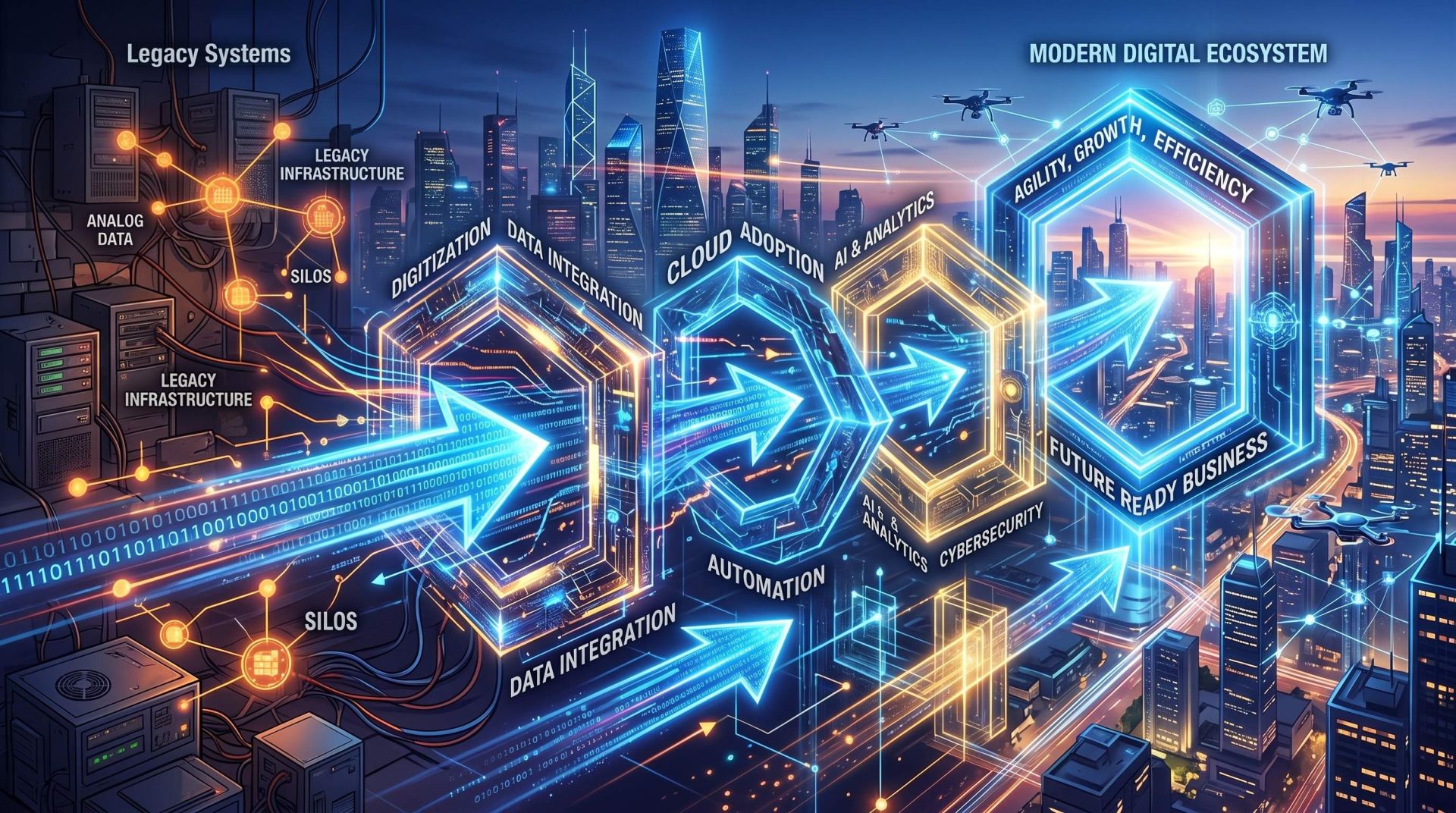
Throughout the history of digital transformation, we have witnessed the rise of personal computers, the internet, and cloud computing. AI Factories represent the next logical step in this evolution – the moment when digital intelligence begins to be produced at industrial scale, becoming as universally accessible as electricity from a power outlet or a Wi-Fi connection.
The true winners of this revolution will not be those who purchase the greatest number of processors, but those who demonstrate the greatest business insight – combining technology with a clear strategy, high-quality data, and well-defined business objectives.