Highlights
Many organizations today are eager to harness artificial intelligence to automate processes, analyze data, and develop new digital services. The challenge, however, is that critical business operations often continue to rely on legacy applications. These systems have evolved over many years and were designed in an era when few could have anticipated the pace at which technology would advance.
As a result, legacy modernization has become one of the most important topics on IT leadership agendas. Increasingly, AI is playing a supporting role in these initiatives. Not because it can modernize applications autonomously, but because it helps organizations understand existing systems more quickly, reduce project risk, and accelerate the work of technical teams.
The greatest value of AI in software modernization projects is not automatic code conversion, but the reduction of time required to analyze systems and prepare transformation plans. This allows teams to focus on architectural decisions instead of manually reviewing thousands of lines of code.
Why is legacy modernization such a challenge?
Legacy systems are applications that still support critical business processes but have gradually become difficult to maintain and evolve. While they are often stable and reliable, even minor changes may require significant effort and introduce considerable risk.
The most common challenges include:
- outdated or missing documentation,
- business logic embedded deep within the codebase,
- obsolete technologies,
- complex dependencies between modules,
- insufficient test coverage,
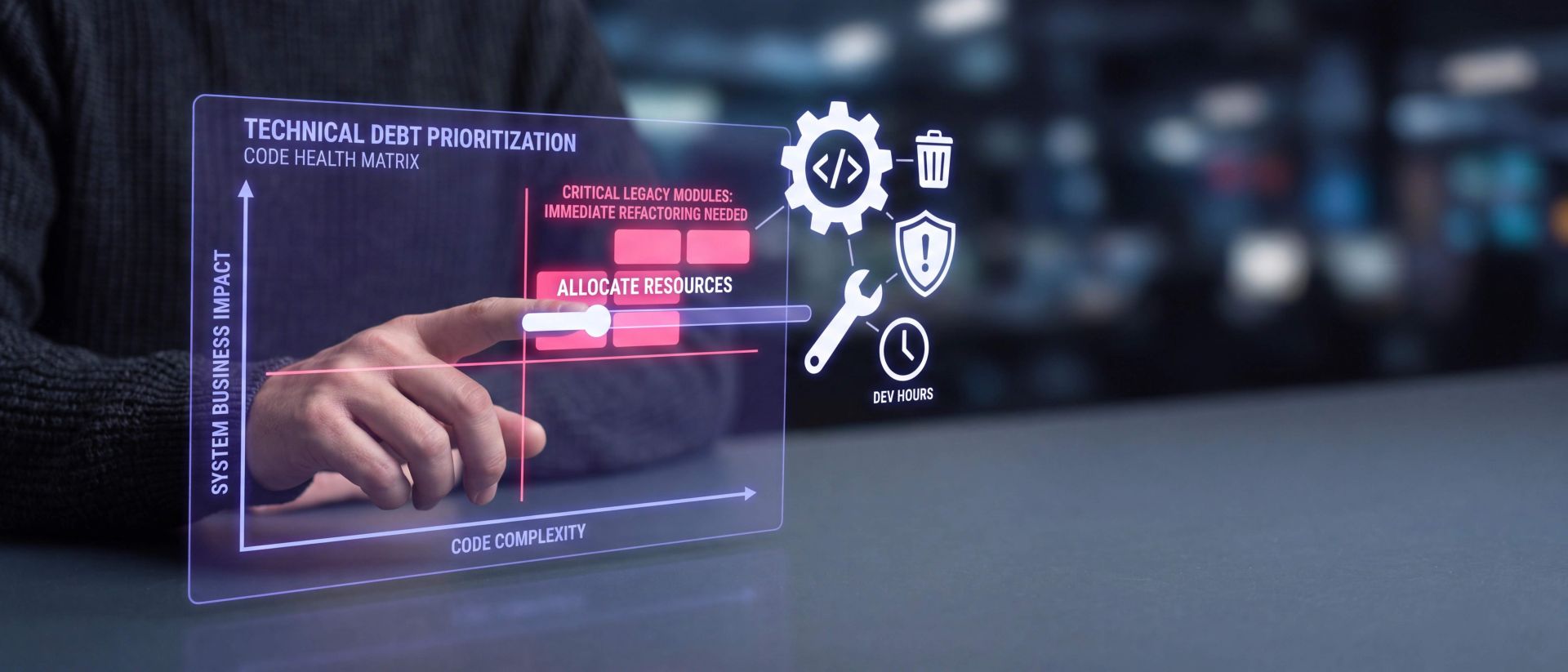
- growing technical debt.
In practice, this means that before any transformation effort begins, organizations must first answer a fundamental question: How does the current system actually work? This is why modernization projects should typically start with a comprehensive assessment of the existing application landscape, enabling teams to evaluate the system’s condition and identify potential risks.
Where does AI deliver the greatest value?
Despite popular assumptions, AI is not a replacement for software developers. Its primary value lies in supporting analysis and organizing knowledge about complex systems.
AI can assist with:
- source code analysis,
- identification of dependencies between components,
- reconstruction of technical documentation,
- detection of duplicate code and technical debt,
- test generation,
- risk assessment for modernization initiatives.
This support is particularly valuable in large-scale environments, where manually analyzing applications could otherwise take weeks or even months.
AI for code analysis and business logic discovery
One of the greatest challenges associated with legacy applications is the lack of understanding of how they actually operate. Documentation often fails to keep pace with years of incremental changes, and crucial knowledge may exist only within the code itself or in the minds of long-standing employees.
Modern AI tools can analyze application structures, group related functions, and identify relationships between modules. As a result, teams can more quickly pinpoint critical system components and gain a deeper understanding of underlying business logic.
However, AI does not replace code reviews or architectural expertise. Its role is to accelerate analysis, not to make strategic decisions about the future direction of an application.
Reconstructing documentation and mapping dependencies
The absence of accurate documentation remains one of the most common issues faced by teams modernizing legacy systems.
AI can support the creation of functional descriptions, technical documentation, and dependency maps covering application modules, databases, and integrations. Such insights enable organizations to define project scope more effectively and minimize the risk of costly errors.
This capability becomes particularly important when companies are planning large-scale IT migrations or redesigning application architectures.
Supporting refactoring and testing
Modernization does not always mean rebuilding an application from scratch. In many cases, it is more cost-effective to refactor selected components and gradually reduce technical debt.
AI can support this process by identifying code segments that require improvement, detecting duplication, and suggesting potential optimizations.
Another highly valuable application is automated test generation. In modernization projects, testing is essential to ensure that a new version of an application preserves critical business functionality. AI helps teams create test scenarios more efficiently, increasing confidence and reducing project risk.
AI and legacy system migration
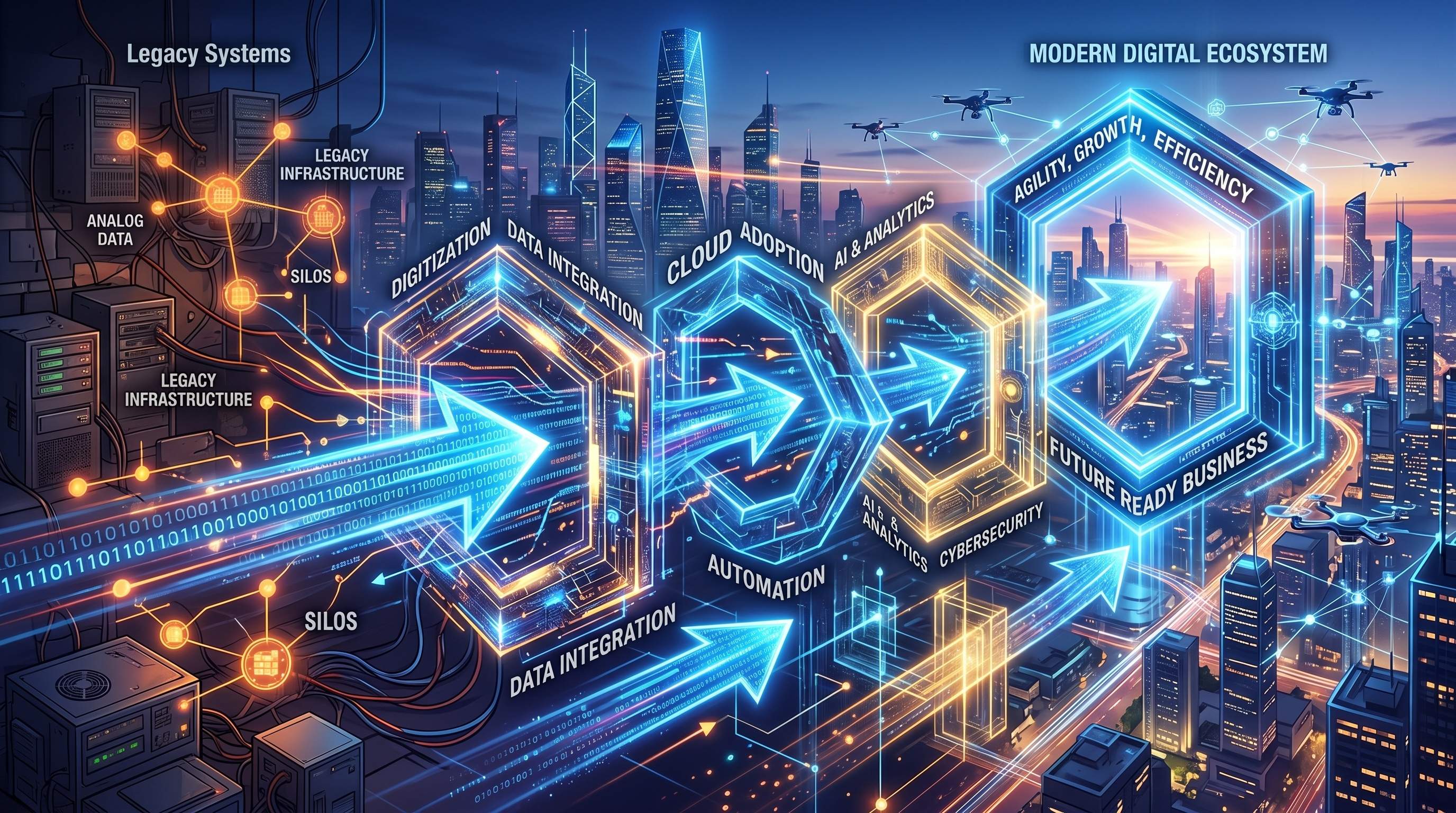
Legacy system migration can take many forms: migrating to new technologies, redesigning architectures, extracting new services, or moving applications to the cloud.
AI provides the greatest value during the preparation phase. It helps organizations analyze existing environments, identify dependencies, and assess potential risks. As a result, technology leaders can make decisions based on data and evidence rather than assumptions.
For organizations pursuing cloud-based modernization strategies, migration to platforms such as Microsoft Azure may be a natural next step within a broader digital transformation initiative.
The limitations of AI
Although artificial intelligence continues to evolve rapidly, it remains a tool rather than an autonomous decision-maker.
AI can misinterpret code, overlook business context, or fail to recognize unconventional dependencies. For this reason, all conclusions, recommendations, and outputs should be validated by experienced technical experts.
Particular attention should also be paid to data security, access control, and the quality of materials used during analysis.
How to get started with legacy modernization
The safest first step is a thorough assessment of the existing environment. Only by reviewing source code, documentation, integrations, and technical debt can organizations determine whether the most appropriate strategy is refactoring, partial redevelopment, migration to a new architecture, or cloud adoption.
AI can significantly accelerate this process, but successful legacy modernization still depends on combining technology with the expertise of architects, developers, and business analysts.
If your organization is planning to evolve legacy applications or prepare for a migration initiative, beginning with a comprehensive assessment of the current environment is often the most effective way to reduce risk and choose the right transformation path.