Highlights
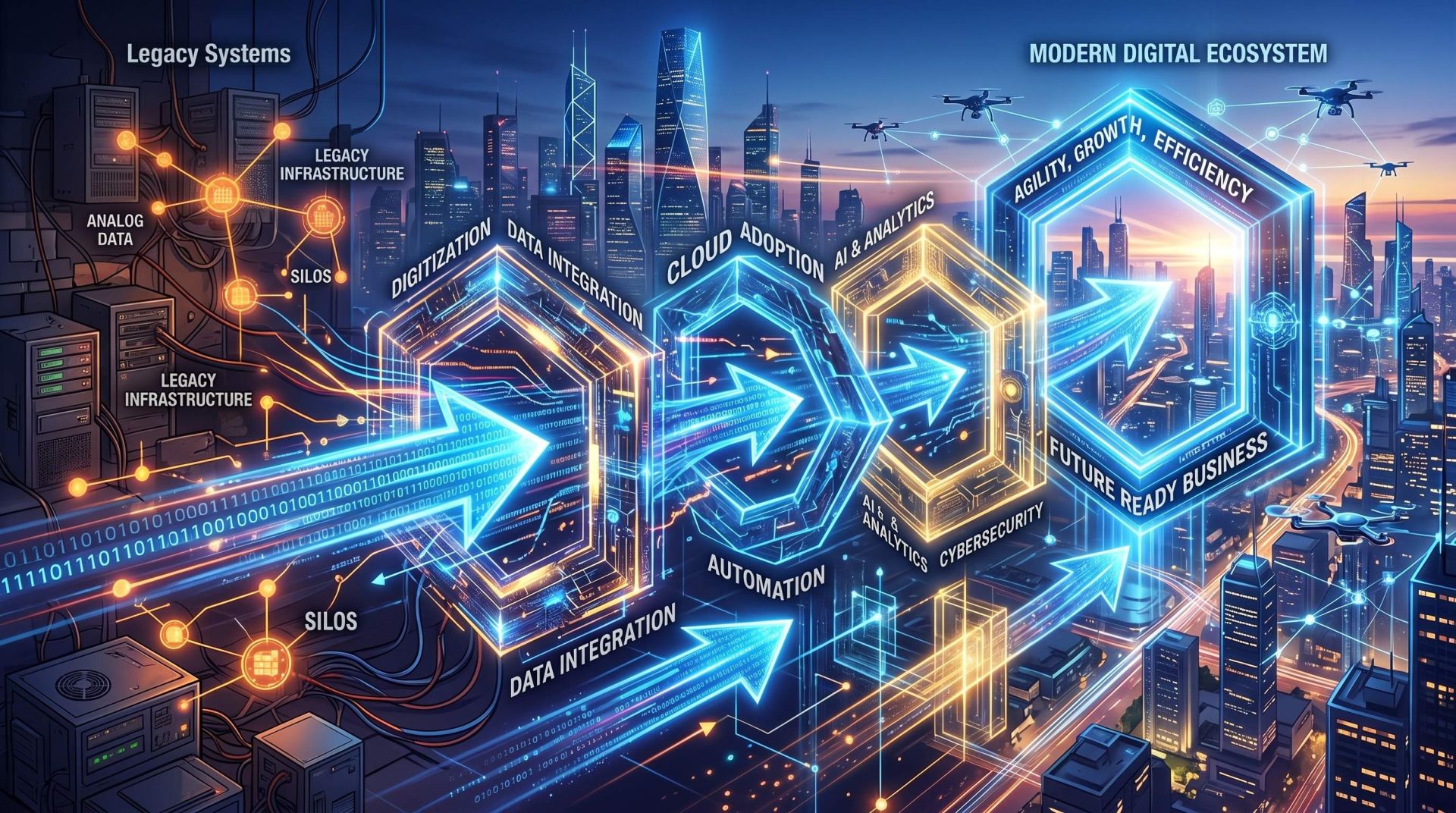
Artificial intelligence is rapidly changing the way the e-commerce industry operates. AI for business is no longer just a technological trend – it has become a key driver of digital transformation for modern organizations.
E-commerce companies increasingly use AI solutions to automate processes, personalize customer experiences, optimize operations, and support data-driven decision-making. In practice, AI implementation in business not only helps increase sales, but also improves operational efficiency and strengthens competitive advantage in an increasingly demanding market.
Modern AI systems now support nearly every area of e-commerce operations — from customer service and marketing to logistics, pricing, software development, and real-time data analytics. More and more organizations view AI transformation as a strategic direction for business growth and the foundation of modern digital commerce.
1. Intelligent AI-powered customer service
One of the most common applications of AI in e-commerce is the use of chatbots and voicebots powered by natural language processing (NLP) and machine learning technologies.
Modern AI chatbots enable:
- 24/7 customer support,
- automated responses to inquiries,
- support for purchasing processes,
- complaint and ticket handling,
- customer intent analysis,
- personalized communication.
By integrating with CRM systems, e-commerce platforms, and ERP solutions, AI-powered chatbots and voicebots can automate multiple business processes without requiring human agents.
AI automation in customer service helps organizations reduce operational costs, increase scalability, and improve customer experiences.
More companies are also implementing conversational AI to support omnichannel sales and intelligent communication automation across digital channels.
2. Personalized product recommendations
One of the greatest advantages of AI for e-commerce is the ability to create highly personalized shopping experiences.
AI algorithms analyze:
- purchase history,
- user behavior,
- customer preferences,
- behavioral data,
- shopping trends,
- real-time activity.
Based on this data, AI systems generate dynamic product recommendations tailored to individual customer needs.
AI-driven personalization helps businesses increase:
- conversion rates,
- average order value,
- customer engagement,
- customer lifetime value,
- brand loyalty.
Modern AI solutions increasingly leverage predictive analytics to forecast future purchasing behavior and identify high-value customers.
3. AI in inventory management and lLogistics
Artificial intelligence is also playing a growing role in supply chain management and logistics within e-commerce.
AI in logistics enables:
- demand forecasting,
- inventory optimization,
- fulfillment process automation,
- delivery risk analysis,
- delay prediction,
- route optimization,
- intelligent stock management.
By analyzing historical and real-time data, organizations can plan logistics operations more effectively and reduce costs related to overstocking or product shortages.
AI for e-commerce businesses enables organizations to build more scalable and resilient logistics operations that support the growth of modern digital commerce.
4. Fraud detection and transaction security
The growth of online commerce also brings an increasing number of cybersecurity threats and transaction fraud risks.
AI systems powered by machine learning can analyze massive amounts of transaction data and identify suspicious behavioral patterns in real time.
AI supports:
- payment fraud detection,
- transaction risk analysis,
- anomaly monitoring,
- customer data protection,
- automation of security processes.
In practice, AI implementation in organizations helps reduce financial losses and improve the security of e-commerce operations.
As AI systems become more widespread, the importance of AI governance also increases, covering data security, model transparency, and regulatory compliance.
5. Dynamic pricing and price optimization
Modern AI solutions enable real-time dynamic pricing strategies.
AI algorithms analyze:
- competitor pricing,
- demand levels,
- seasonality,
- market trends,
- customer behavior,
- product availability.
Based on this analysis, AI systems automatically adjust product prices, helping organizations maximize margins and remain competitive.
AI-powered pricing enables companies to react faster to market changes and optimize sales strategies more effectively.
Increasingly, AI solutions also support customer sentiment analysis, helping organizations better understand consumer expectations and preferences.
6. Marketing automation and AI-driven commerce
Artificial intelligence is also revolutionizing digital marketing and customer experience management.
Modern AI systems support:
- marketing automation,
- personalized communication,
- customer segmentation,
- content generation,
- campaign performance analysis,
- performance marketing optimization,
- omnichannel marketing automation.
AI for business enables organizations to create more targeted and effective campaigns based on customer behavior and data analysis.
Generative AI is also becoming increasingly important for creating product descriptions, marketing visuals, content recommendations, and automating content production processes.
AI in software development and e-commerce platforms
The development of modern e-commerce platforms increasingly involves AI in software development and AI in SDLC (Software Development Lifecycle).
Artificial intelligence supports:
- code generation,
- test automation,
- application quality analysis,
- system performance monitoring,
- development of intelligent commerce platforms,
- integration of AI systems with e-commerce architectures.
As a result, organizations can build scalable digital platforms faster and implement innovative AI solutions more efficiently.
AI transformation in e-commerce organizations
Successful AI implementation requires more than technology alone – it also requires organizational readiness and strategic planning.
That is why companies invest in:
- AI training,
- AI adoption across teams,
- digital skills development,
- AI strategy creation,
- integration of AI into existing business processes.
AI transformation is becoming one of the most important growth directions for modern e-commerce organizations.
Summary
Artificial intelligence is redefining the way the e-commerce industry operates. AI for companies supports process automation, customer experience personalization, operational optimization, and the development of modern digital commerce platforms.
Organizations that begin implementing AI solutions early will be better positioned to scale operations, improve efficiency, and build a competitive advantage powered by data and modern technologies.
However, success depends on a strategic approach to AI within the organization – one that includes not only technology implementation, but also AI governance, workforce enablement, and a well-planned AI transformation strategy.