Case study: How MIND Transformed Mobile Healthcare in Austria
Client_
MIND is a tool that supports mobile home care, designed to improve the work of both management teams and nursing staff.
Together with our sister company Euvic Software, we redeveloped an existing software product to meet new legal requirements, expand functionalities, and create a modern solution for mobile home care.
It consists of two main components:
1. Backoffice – for team leaders:
- Enables the organization and planning of patient visits.
- Allows for efficient management of nursing staff schedules.
- Facilitates coordination of activities and ensures
- transparency in timetables.
2. Mobile application – for nursing staff:
• Provides access to the current work schedule.
• Enables the orderly execution of planned patient visits.
• Supports mobility and flexibility in fieldwork.
Thanks to MIND, the entire home care process becomes more organized, transparent, and tailored to the needs of both patients and care workers.
Our team’s role in the project_
Euvic S.A. joined forces with Euvic Software to modernize their existing solution. Our role was to provide a dedicated team of developers and testers with a technical leader, ensuring that the product was fully redeveloped, aligned with regulations, and enriched with new functionalities.
Key Objectives_
- Implementation of the MIND application to replace the previous, outdated application.
- Integration of MIND into the “ICM” product family (ICM is a platform in which the client embeds solutions for new projects and customers).
- Support for multiple clients within a single system (multitenancy).
- Support for iOS and Android (mobile application).
Challenges_
- The mobile application must work in the field, including offline or
in conditions with poor internet connectivity. - Deployment in one of the largest aid agencies in Austria.
- The system contains business-critical data for end clients.
Workflow_
- Modernization of the ICM architecture (splitting the monolith into
a modular monolith.) - Iterative implementation of the MIND application (backoffice + mobile).
- Deployment of MIND to the end client.
- Development/maintenance of MIND and cooperation in developing other ICM modules.
Strategy Adopted_
The project was carried out using the Agile (Scrum) methodology, with two-week sprints and regular meetings with the client. The team adopted an iterative approach to deployment: an MVP version was delivered first, and then developed further in subsequent stages.
Since this was not a greenfield project but a redevelopment of an existing product, the strategy placed strong emphasis on modernization, risk mitigation, and compliance. Automated tests and CI/CD processes ensured stability, while workshops with stakeholders allowed us to extend functionalities beyond the original scope.
Project deliverables_
Backoffice section (for team coordinators)
Key features and functionalities of the MIND application:
- Planning and management:
- Clear calendars for planning clients, routes, and staff.
- Automatic suggestions for routes and staff assignments.
- Support for multi-week work schedules.
2. Data management:
- Client administration (contacts, doctors, etc.).
- Employee and team administration.
- Service templates assigned to clients.
- Route and service planning (who, when, to whom).
3. Documentation and care:
- Digital documentation: from diagnoses and care plans to service execution.
- Support for assessments of diagnoses, goals, and actions (care planning).
- Complaint management.
4. Billing and reporting:
- Client billing (private and state-funded).
- Employee billing (including leave, overtime, working hours).
- Invoice export and printing.
- Reports and external interfaces.
5. Access management and workflow:
- Different permission levels.
- Workflow for approving absences.
- Change history in data.
6. Additional features:
- Internal messaging system.
- Attachment management.
- Data tagging and sharing via links.
Mobile application (for care staff)
- Schedules and services:
- View of own work schedule.
- Confirming or rejecting schedule changes (with signature).
- View of assigned services.
- Confirming/rejecting changes to services.
2. Service execution:
- Performing services (start/stop or manual entry).
- Client’s signature as proof of service completion.
- Driver’s logbook.
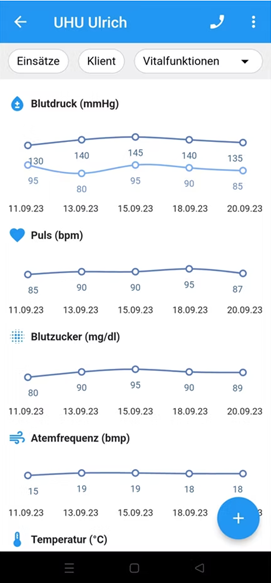
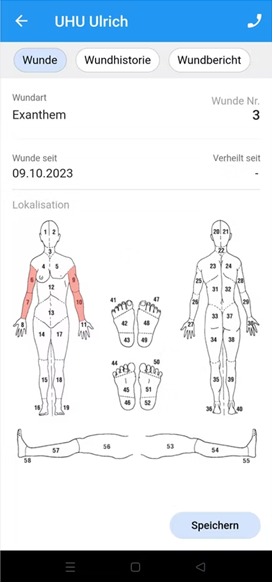
3. Medical documentation (planned for a new version):
- Documentation of wounds, vital signs, etc.
4. Communication features:
- Mobile phone book (quick dial to colleagues and clients).
- Ability to plan own visits on mobile.
Integration with ICM (Integrated Company Manager)
General ICM features:
- Web application, browser-independent.
- Responsive interface.
- System color customization (for the organization or individual user).
- Avatars/photos of users, employees, and clients.
- Change history in data.
- Shared administrative modules and the ability to share data.
Benefits_
For the client:
- Faster deployment for new clients thanks to multitenancy architecture.
- Reduced costs of maintaining legacy systems.
- Reduction of technical debt.
For the user:
- Lower operational costs through process automation.
- Better human resource management thanks to data analytics from the application.
- Application tailored to individual client needs.
Project team structure_
- Team lead,
- Mobile dev,
- 3x QA,
- 4x full stack dev.
Technologies and frameworks used_
- AWS
- Oracle
- .NET 8
- Vue.js
- Ef core
Summary_
The MIND project is a successful example of digital transformation in the healthcare sector. By joining forces within the Euvic Group, we redeveloped the existing Euvic Software product into a fully modernized and compliant solution. Thanks to this collaboration, thousands of field employees now benefit from a system that not only meets legal standards but also introduces new functionalities and process improvements.
Next steps_
- Deployment of the application to additional clients.
- Integration with external systems (e.g., e-prescriptions,
e-documentation). - Continuous development of the application in line with regulatory changes and new client requirements.